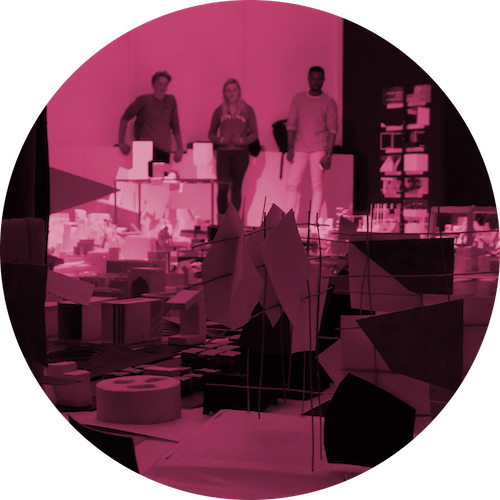
We might immediately associate the term ‘exhibition’ with the art gallery or museum, however it also has a place in educational contexts, for instance through displays of student projects, poster presentations at academic conferences, and the sharing of ethnographic work with research participants and the public. What these different activities have in common is a desire to make academic content available to an audience beyond the classroom or other setting in which it was conceived.
Across the three thematic blocks which run from week 2 to week 10, you will contribute towards an online exhibition that displays your thinking, knowledge and understanding around our course themes. For each thematic block you will be assigned your own ‘gallery space’ within Miro where you will add and contextualise digital artefacts that reflect your critical engagement with Cyberculture, Community culture and then Algorithmic culture.
In order to find content for your gallery you will need to venture into the public spaces of the web to gather digital material that corresponds with each course theme. The emphasis here is upon adding ‘digital artefacts’ (which could include images, news articles, blog posts, videos, Tweets and beyond) that enable you to make a critical connection with any of the course readings, topics or ideas we are exploring as a group. You will explain this connection by adding a short (single paragraph) written description alongside the corresponding artefact.
You should add six artefacts per block, working across a range of different media and genres. The emphasis is upon criticality and curation, not filling every corner of your gallery with content. We will not be grading these galleries until the end of the semester so you are free to create – that is edit, add or remove material (although again being sure not to exceed six artefacts per block).
There will also be structured activities where you create original content that will enhance the exhibition (including a cyberculture visualisation, a mini-ethnography and an algorithmic play representation).
At the end of each block you should write a ‘catalogue entry’ of no more than 500 words discussing what the gathered material has to say about the course theme, perhaps also reflecting on your experience of creating the gallery in relation to cyberculture, community culture or algorithmic culture. This should make clear connections with the relevant thematic readings and ideas (rather than being a descriptive account of what you did or a discussion of methods).
We strongly encourage you to maintain your gallery spaces week-by-week so that by the end of Week 10 you are ready to shift your attention to the digital essay assignment. However, in case you do want to take a bit more time to refine your gallery spaces, the deadline for completing this work in Monday 6 December at midday (UK time).
None of the individual artefacts in your gallery will be graded, but rather they will contribute towards the overall effect, for instance by showing critical engagement with course themes and other qualities captured in the assessment criteria. Your work across the three different gallery spaces is worth 50% of your overall course mark.
Audience and good academic practice
As well as putting your artefacts on display, we want you to regularly view and comment on those shared by other members of the group (you can do this in Miro by adding a comment to a piece of content). The audience for your work will therefore most readily be made up of fellow students and tutors. With this in mind, the normal principles of good academic practice around attention to accuracy, issues of copyright, and acknowledging the author are particularly important. Meanwhile when you are commenting on the work of others – whether critiquing an established author or leaving a message alongside an artefact produced by another member of the group – please do so with the normal attention to decency and respect.
Curation
In recent times the art of curating has extended beyond the environments of the gallery and museum with which it has been most commonly associated, instead being adopted by those involved with live music and other materials and practices. In the context of the Education and Digital Culture course, ‘curation’ provides a useful guide for thinking about the selection of material for our exhibition space, as it places emphasis on carefully selecting and sharing material that helps to explore contemporary education through each of our Cyberculture, Community culture and Algorithmic culture themes. In light of the wealth of digital material associated with any of these topics there is a need to focus on gathering those artefacts that enable you to reflect or examine particular ideas from the course readings or the topic more generally. In particular, for our work around Community culture (Block 2), you will need to think about how the collection, arrangement and explanation of digital artefacts helps to tell the story of your mini-ethnography and your chosen online educational community. More generally, before adding any artefacts to your own gallery space in Miro, you might want to look at this short chapter about the evolving nature of curating practice, kindly recommended to us by Dr Kirsten Lloyd, a lecturer in Curatorial Theory and Practice here at the University of Edinburgh.
Groys, B. (2008). Multiple Authorship in Art Power (pp. 100-108). Cambridge, Mass.: The MIT Press.